The role of devices in the household: Recommendations for parents and families
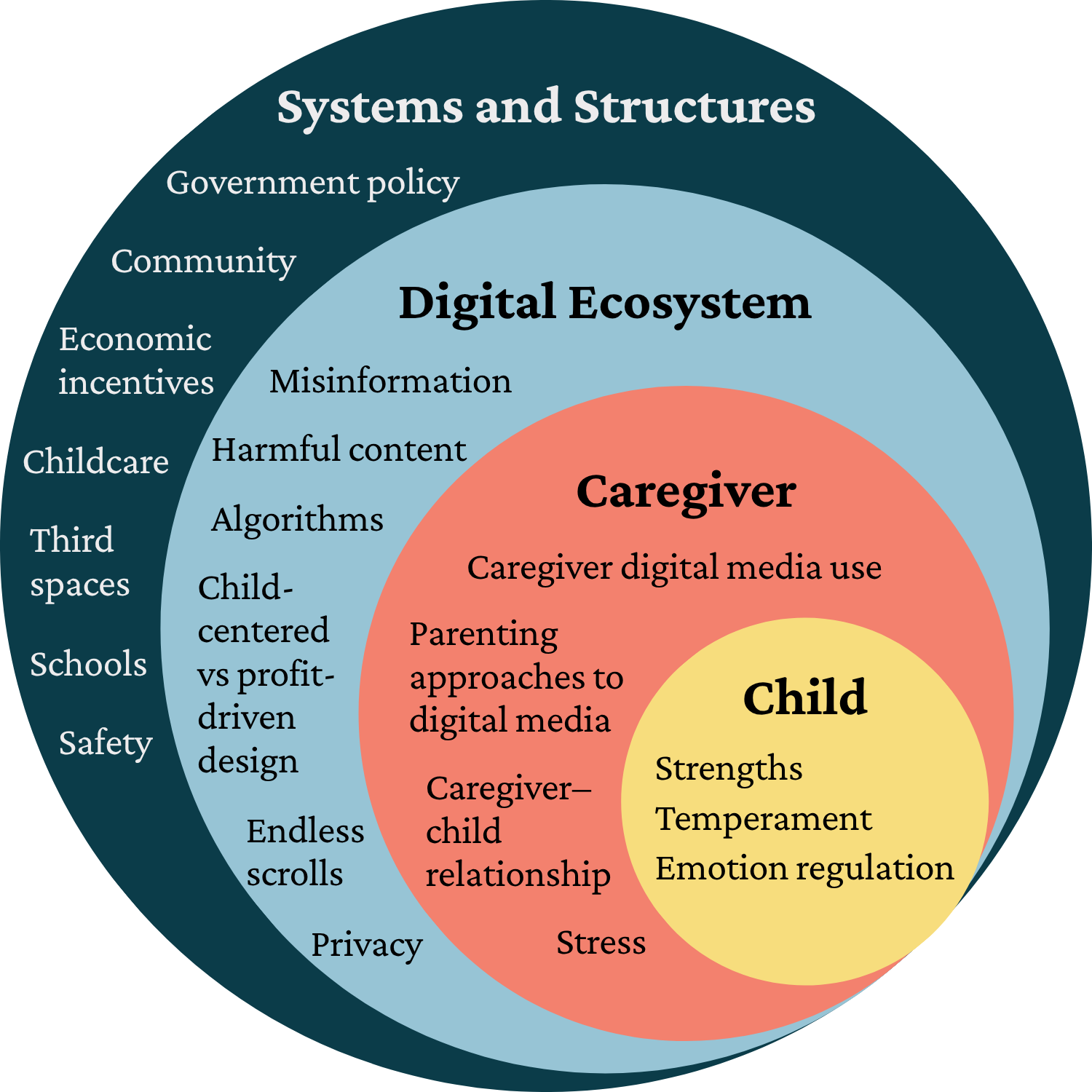
As technology becomes pervasive, many parents and families grapple with the role of technology in their children's lives. Research generally finds that more screen time is related to less optimal child development. However, the American Academy of Pediatrics (AAP) updated its guidelines in January 2026 to reflect the reality of the digital world. Rather than setting strict screen time limits, the AAP recommends an approach that considers a socioecological model of children's digital ecosystem (pictured below). This model displays properties of nested circles of care that shape individual children, including the child, their caregivers, the digital ecosystem, and broader societal systems.
The Child
Individual factors like temperament, emotion regulation, identity, and a personalized social media feed affect each child's relationship with media. Every child is different, so it is important to have ongoing conversations to foster digital literacy and set boundaries for the whole family.
Recommendations for Parents
Digital media use is associated with language learning, STEM learning, and prosocial behaviors if it consists of high-quality educational content like PBS Kids and Sesame Workshop that integrate principles of child development. Look for media that models social-emotional skills, includes tailored learning goals, contains elements of free play, and promotes critical thinking. These benefits are greater when children are engaging with the media with a caregiver.
Teens have more variable media-related outcomes. Especially when teens have supportive caregiver involvement, access to high-quality content, and positive peer influences online, an appropriate amount of digital media use can be beneficial for learning, identity formation and expression, and wellbeing. There isn't a one-size-fits-all recommendation for when teens are ready for a phone, but consider factors like their digital literacy, truthfulness, ability to navigate social conflict, and practical needs. The AAP has a PhoneReady Questionnaire that can aid in this conversation. Pay close attention for negative effects of digital media like anger outbursts, disrupted sleep, nearsightedness, and a sedentary lifestyle.
The Reality of the Digital Ecosystem
Child-centered design can promote positive outcomes for children, but engagement-based designs can contribute to problematic or risky media use. Children may be exposed to low-quality and harmful content, advertising, misinformation, behavioral reinforcers, and privacy difficulties online. Early and regular conversations about digital experiences, algorithms, and engagement-prolonging design can help children learn to set boundaries with technology and figure out how to use digital media in a way that promotes enrichment and community.
All information for this email was drawn from the AAP's recent policy statement on digital ecosystems, children, and adolescents. Click here to read the full statement.